Privatenote vs. other secure messaging apps- Features, security, and usability
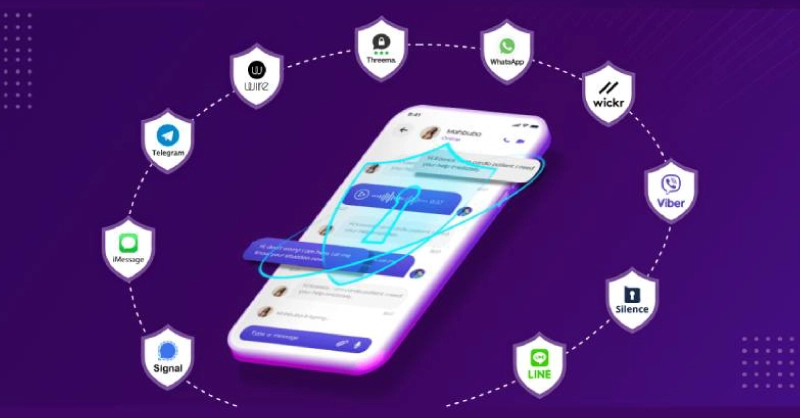
Privatenote is a secure messaging app designed for sending self-destructing messages. It offers a unique feature allowing users to send messages to anyone, even if they don’t have the app installed. This is particularly useful for one-off communications or for reaching contacts who may not be regular users of messaging apps.
The app prioritizes user privacy through robust end-to-end encryption. This means messages are encrypted on the sender’s device and can only be decrypted by the intended recipient; no one else, including the app developers, can access the message content.
What is Privnote used for? Once the recipient sends and reads a message, it automatically self-destructs. This feature ensures that messages are brief, leaving no trace on the recipient’s or sender’s device. This is especially useful for sensitive or confidential communications where the sender wants to ensure that the message is not retained after it has been read.
Privatenote vs. signal
Signal is another popular secure messaging app offering end-to-end encryption for voice/video calls. Like Privatenote, Signal allows users to set messages to self-destruct after a specific time. However, unlike Privatenote, both the sender and the recipient need to have the Signal app installed to communicate securely. In terms of security, both Privatenote and Signal use robust encryption protocols to protect user data. However, Signal has undergone more extensive security audits and has a better track record of transparency and open-source development. Signal also offers additional features such as screen security (which prevents screenshots) and two-factor authentication.
Privatenote vs. telegram
Telegram is a cloud-based messaging app that offers end-to-end encryption for secret chats. Like Privatenote, Telegram allows users to set messages to self-destruct after a specific time. However, unlike Privatenote, end-to-end encryption is not enabled by default in Telegram and needs to be activated manually for each chat. Regarding security, Telegram has faced criticism for using a custom encryption protocol (MTProto) instead of well-established protocols like Signal’s. Since Telegram is based in Russia, there have also been some concerns about how it complies with government requests for user data.
Privatenote vs. whatsApp
WhatsApp is the most popular messaging app, with over 2 billion active users monthly. In 2016, WhatsApp introduced end-to-end encryption for all messages and calls, making it a secure option for communication. However, unlike Privatenote, WhatsApp does not offer self-destructing messages. Regarding security, WhatsApp has faced criticism for its past data-sharing practices with Facebook (its parent company). While WhatsApp has since updated its privacy policy to limit data sharing, some users remain sceptical of its commitment to privacy.
Privatenote vs. wickr
Wickr is a secure messaging app with end-to-end encryption, self-destructing messages, and screenshot protection. Like Privatenote, Wickr allows users to communicate securely with anyone, even if they don’t have the app installed. However, Wickr also offers secure file sharing and voice/video cal features. In terms of security, Wickr has a strong reputation for privacy and has undergone extensive security audits. The app uses well-established encryption protocols and has a transparent privacy policy.